Blog

  • Pure KA1 XRD with the Johansson monochromator

    Pure KA1 XRD with the Johansson monochromator

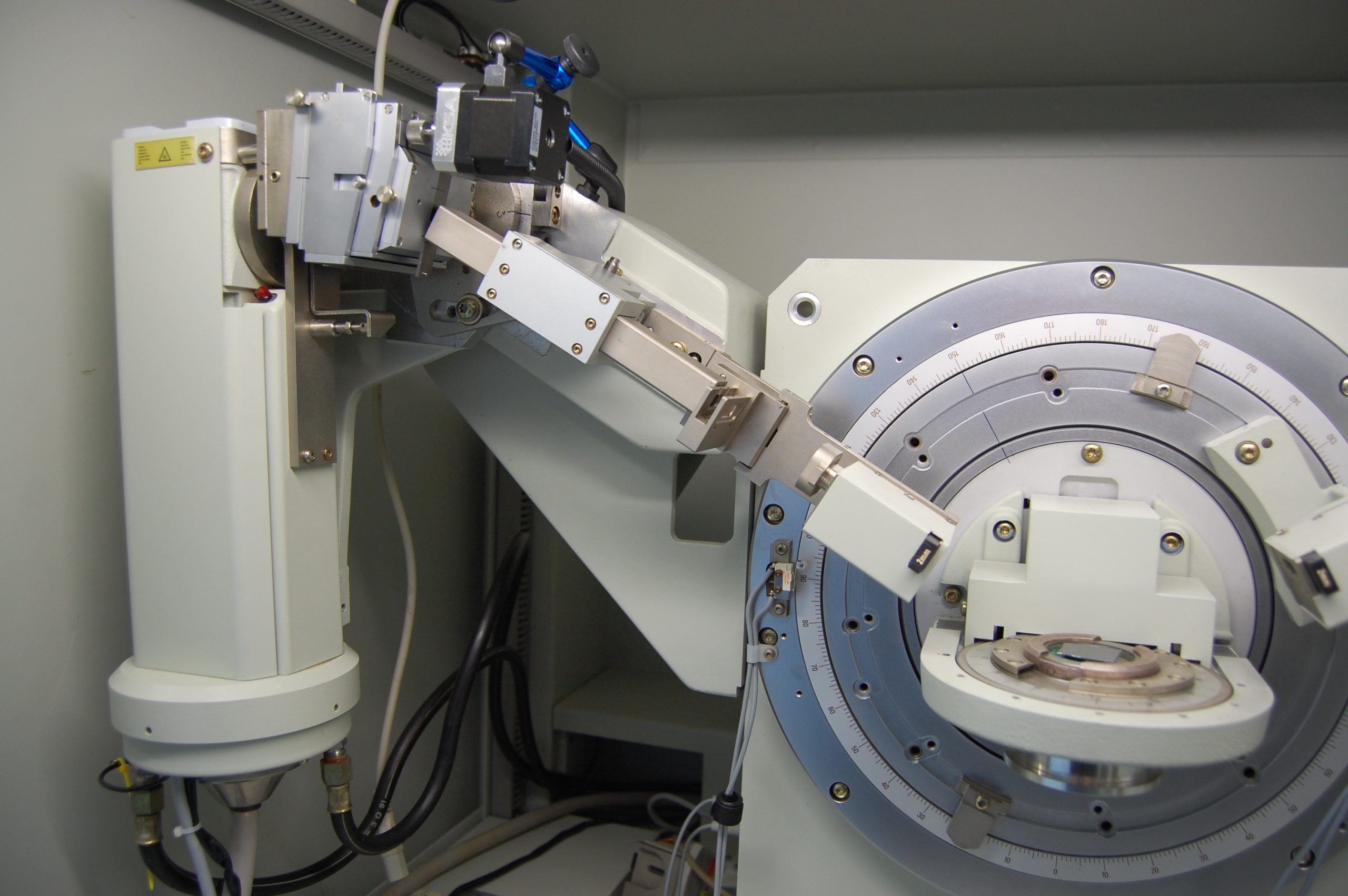
    One of the fundamental facts of lab-based X-ray production is that our x-ray tubes emit much more than the pure KA1 lines we rely on for material characterization and quantification. Most XRD users are familiar with techniques and hardware for the reduction or elimination of KB1, W LA1 and Bremsstrahlung, but take for granted the inseparable pair of KA1 and KA2 (referred to as the “doublet”). Luckily for us, these energies are present in strict proportion such that we can factor their paired presence into most XRD analysis to the point that one might barely notice their effect. However, the fact remains that we will see peak broadening at lower angles and completely independent additional peaks at higher angles due to this superfluous discrete emission.
    Separating the doublet cannot be accomplished electronically or through absorption/attenuation such as might be effective for KB1 energies. It must be done in the primary-beam with an additional diffraction event. Primary-beam monochromators are generally classified by the number of diffraction events required for a photon to pass completely through the device. Single-bounce, 2-bounce and 4-bounce geometries are common with the latter providing the best energy resolution allbeit the lowest intensity (photon flux). My limited experience suggests that while the single-bounce models retain enough intensity to have some application in powder XRD, the others are relegated to HR-XRD applications such as XRR.
    The alignment for any of this hardware is not for the faint of heart as it begins with coarse adjustments using fluorescent screens in the beam path. This was essential for us given how dramatically misaligned the monochromator had become after so many attempts to bring it back into operation. We actually needed our SDD system to verify that we were tuning for Cu KA1 energy rather than the KB1 emissions because some of the most basic aspects of the alignment had pushed way beyond their intended position.

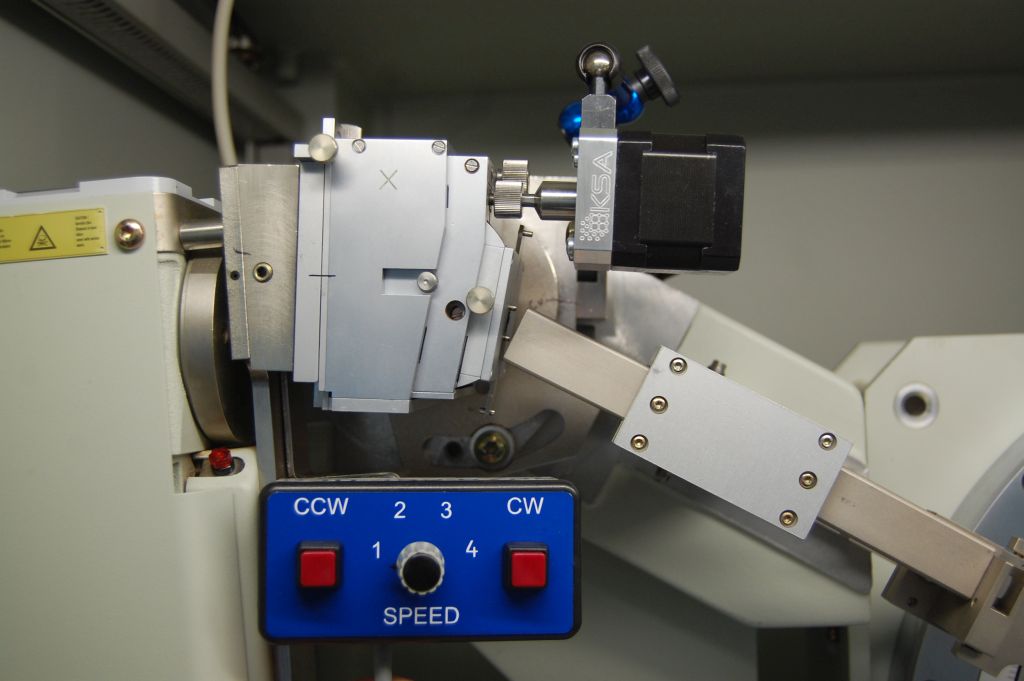
    Along the way we built ourselves a motorized remote adjustment tool which we’ll return to the user as small adjustments are required on a regular basis with this kind of monochromator to retain maximum intensity. It’s quite useful and even versatile enough to allow for the adjustment of multiple control knobs.

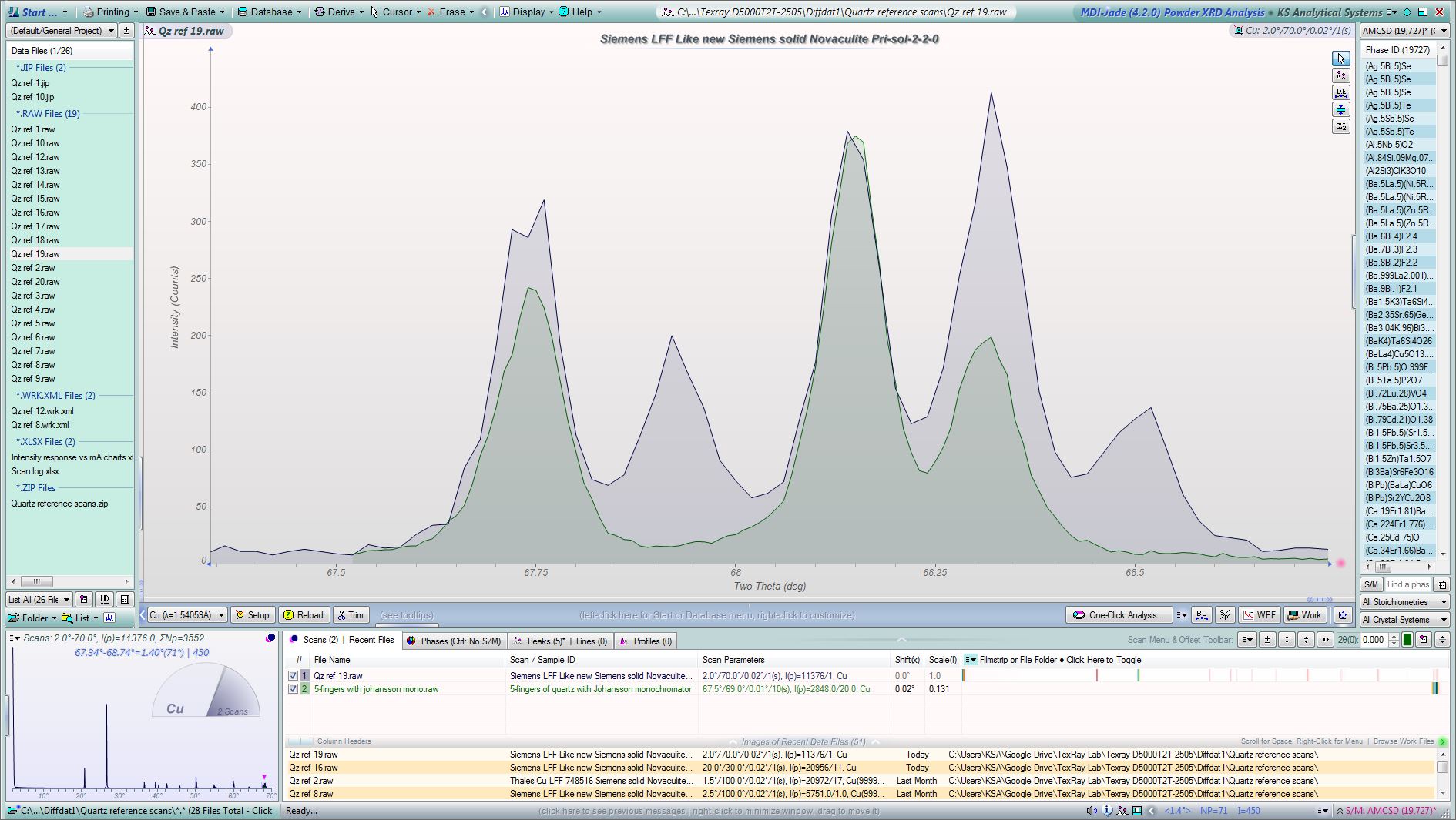
    One final note regarding intensity. It’s easy to get excited about energy resolution like this, but bear in mind that we’re looking at ~20x reduction in intensity due to the inherent losses involved in the primary diffraction event. This data was collected at 10x the normal speed and at half the normal 2Theta step increment so it looks very good, but one would need a compelling reason to slow their data collection this much.

    Another side effect of performing your energy discrimination in the primary beampath is that other issues such as fluorescence effects (incident x-rays exciting elements in the sample causing high background intensities) are harder to avoid than they would be with a diffracted-beam monochromator. The 4x reduction in intensity inherent in the diffracted-beam monochromatization makes it a poor choice to eliminate these effects when the incident intensities are already so low. We recommend energy-dispersive detectors such as our SDD-150 to eliminate extraneous energies without sacrificing net intensity. We’ve also worked with the Bruker LynxEye XE-T detector which has a very high energy resolution compared to other position sensitive detectors (PSD). Contact KS Analytical Systems for more information on these options.
  • Process Overview – Sample Preparation for Zero-Background Sample Holders – With Well

    Process Overview – Sample Preparation for Zero-Background Sample Holders – With Well

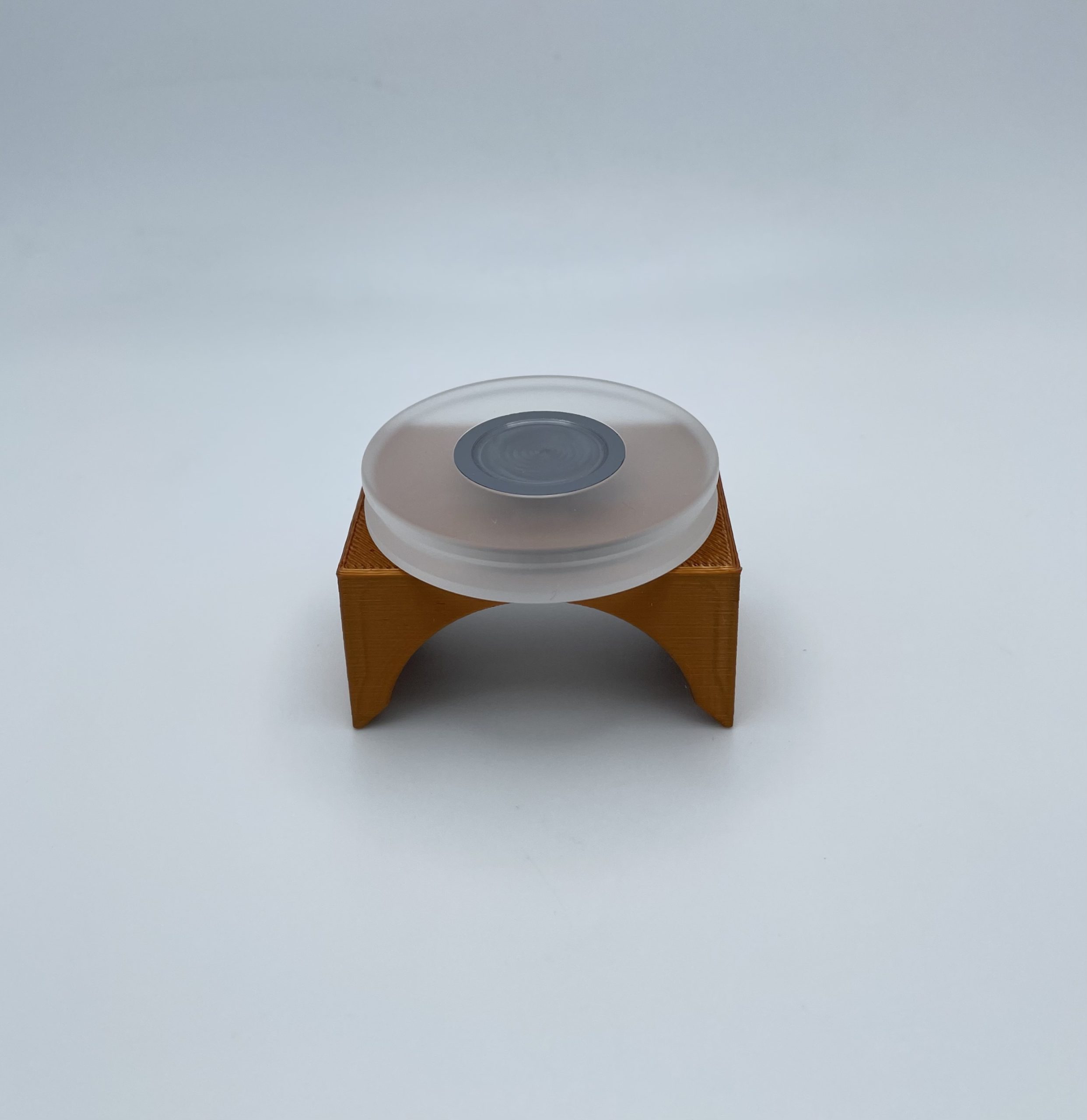
    This post is for those who might be new to sample preparation using a top-loading zero background sample holder (with a well for sample material), or for those who are looking to benchmark sample preparation practices.

    Click here to access & download.

    Check out our selection of sample holders and supplies at https://store.ksanalytical.com/ !

  • Plastic barrier film for air-sensitive sample holders

    Plastic barrier film for air-sensitive sample holders

    Revisiting an experiment from 2014

    I still reference this post on our laboratory site often so it seems like it deserves a place on the main blog for KS Analytical Systems. Enjoy

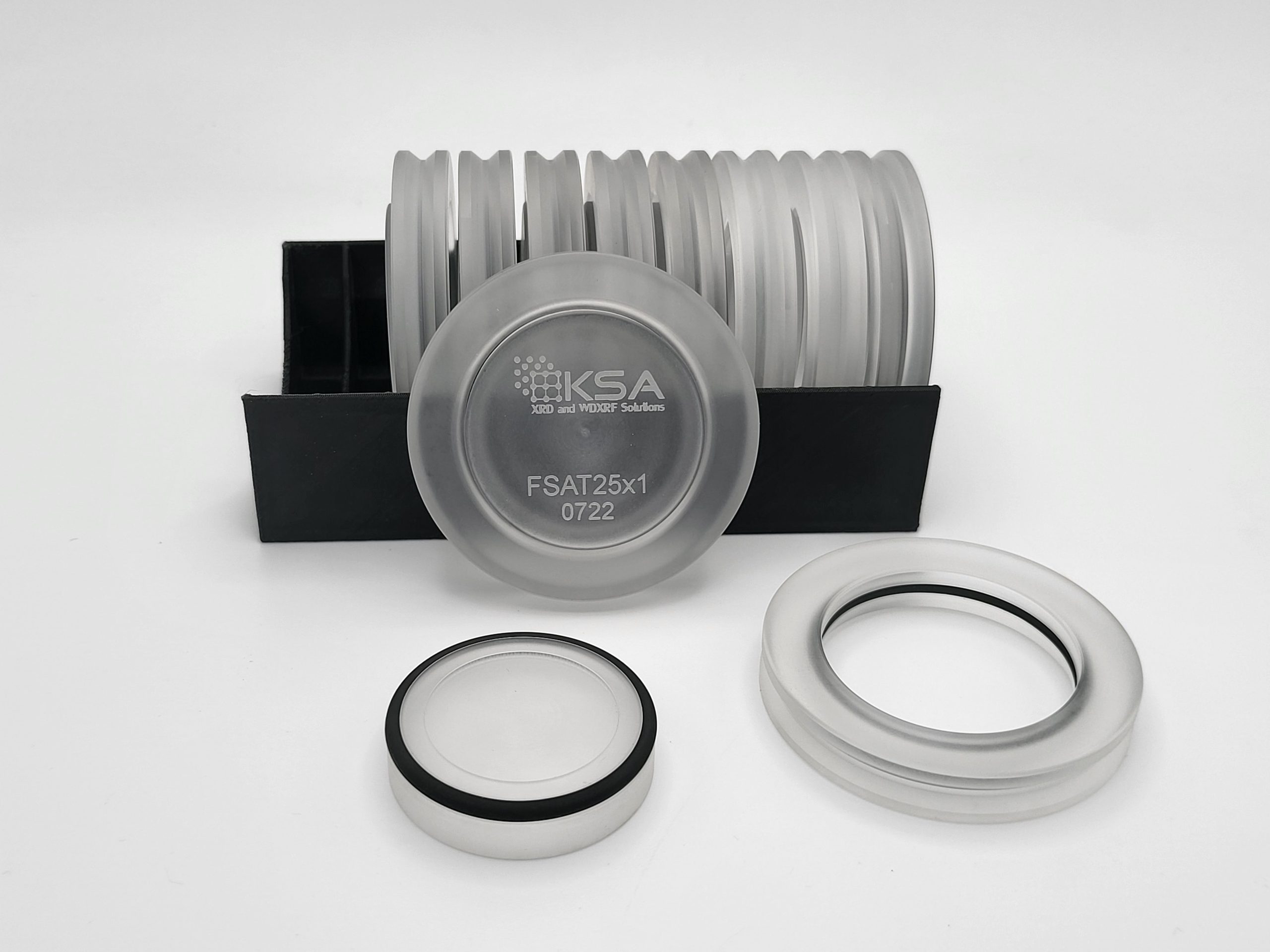
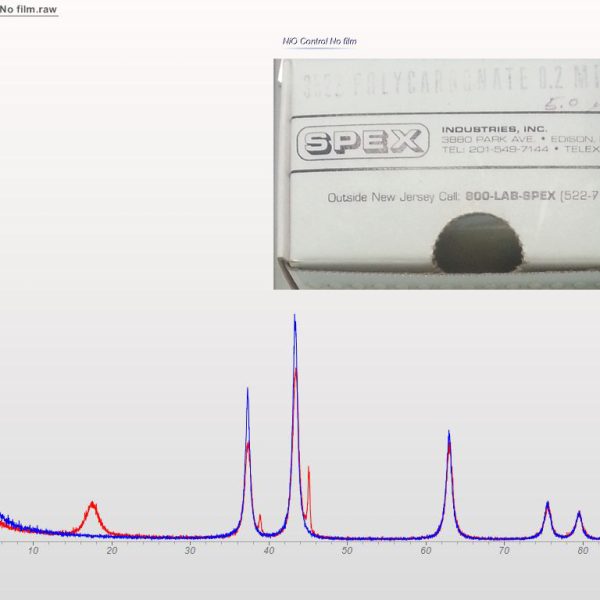
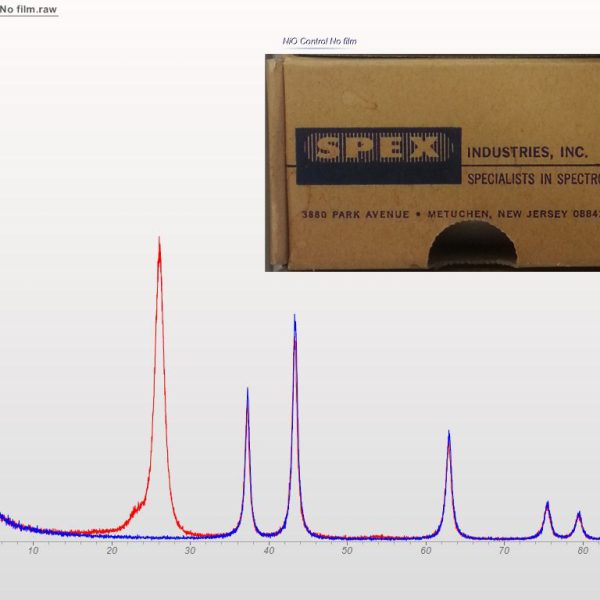
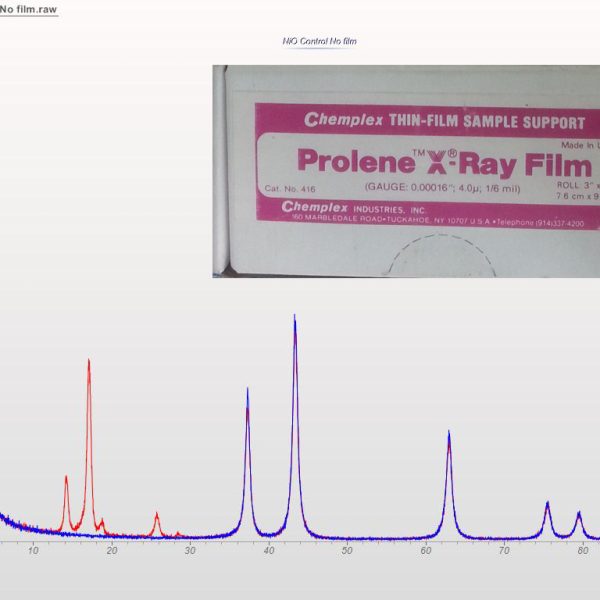
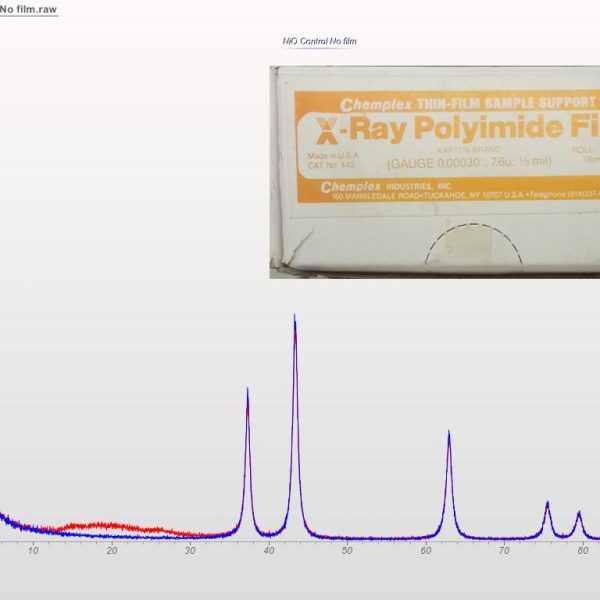
    Our recent sealed sample cell project required a thin covering film to be applied over loose powder before analysis by XRD. We tested a few options for this film as part of the design process and the results were interesting enough that we thought it would be worth dedicating a full post to that data and expanding the range of materials a bit to satisfy our curiosity.

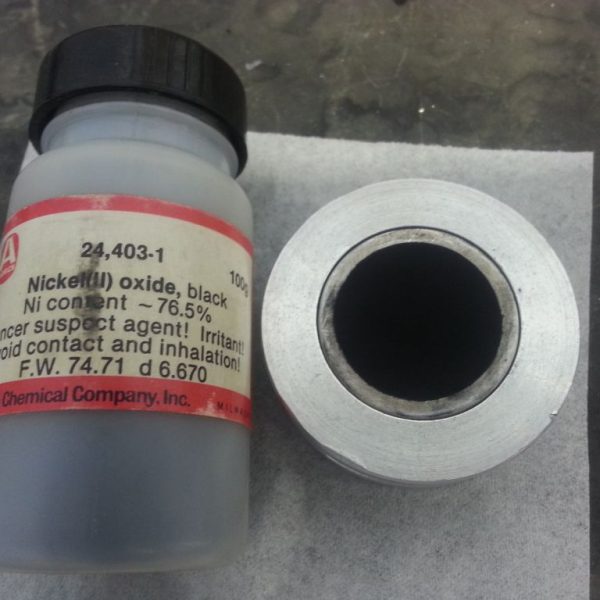
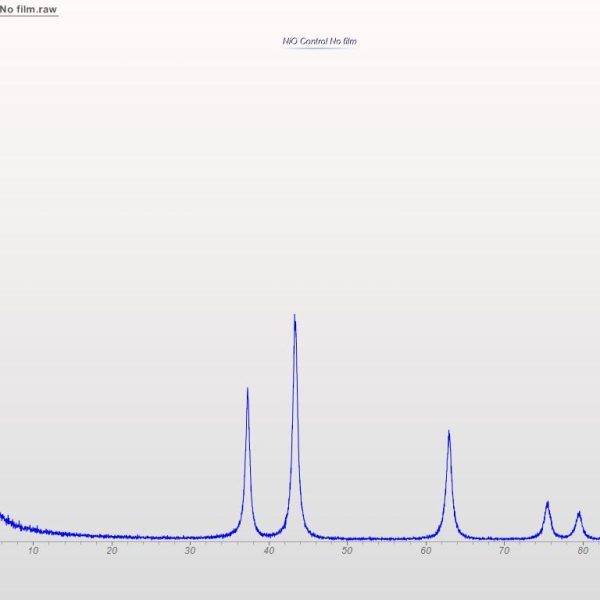
    All data was collected on our primary powder system. This is a Siemens D5000 configured with a theta/theta goniometer, automatic anti-scatter and divergence slits, a standard sealed Cu tube (LFF) and our new KSA-XRD-150 detector system. We alternate between a digital phi stage, 40-position autosampler and the standard, single sample stage which was used in these experiments. I had a spare sealed-sample cell available which made it easy to exchange the films without disturbing the sample surface. The design of these stretches the film taught each time the cell is assembled. I’d originally tried to simply lay the film over a side-load holder, but without being tightly held, it would buckle enough that results at low angles were probably affected. A NiO standard powder was used due to its high purity and compositional difference from any of the film materials.

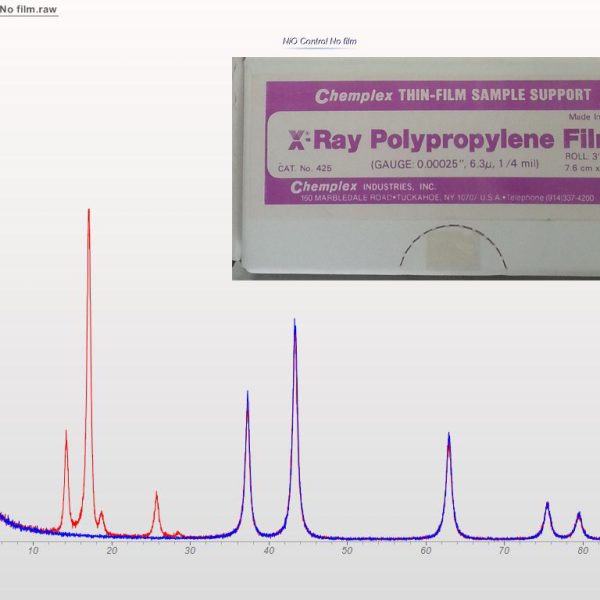
    The data clearly shows that polyimide was the best choice for this application as it resulted in very limited attenuation as well as an extremely minimal increase in background intensity/amorphous scatter. Some of the other patterns were very interesting though.

  • Small, but not insignificant

    Small, but not insignificant

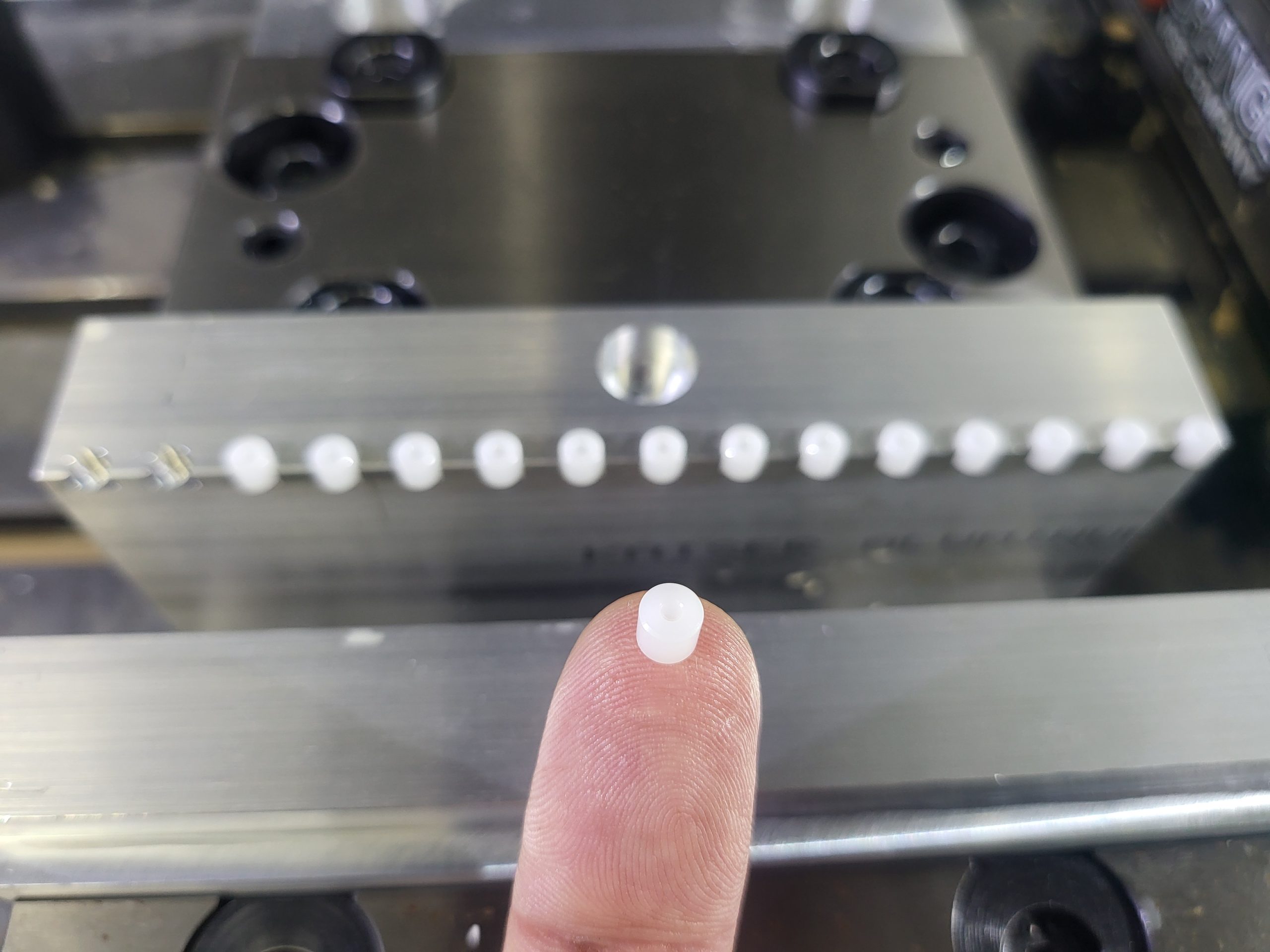
    These are probably the smallest parts we make in-house, but they’re critical to the proper function of about half of the instruments we support. These little bushings support the impeller of the water flow sensor in many Siemens and some Bruker XRF and XRD machines. They last for several years in most cases, but we replace them during most PM service visits because they’re easy to keep on-hand and very inexpensive.

    This is a great example of a part that would force any machine into obsolescence if it were not available. Having the ability to rebuild these sensors gives them a lifespan measured in decades and while they are prone to sticking during periods of downtime, they can almost always be cleaned up and put back into service.

  • The Ultimate Power Protection Solution:  UPS Designs for Bruker AXS Systems by NXT Power

    The Ultimate Power Protection Solution: UPS Designs for Bruker AXS Systems by NXT Power

    KS Analytical Systems is proud to present a new, total UPS solution for clinical and diagnostic laboratory systems, specifically designed for Bruker AXS, by NXT Power. The Integrity Max & Pro UPS is a complete power protection solution providing isolation, power conditioning, and backup protection for Bruker AXS systems. Regardless of input fluctuations, the Integrity series ensures that the output remains continuous and regulated.

    The industry-leading UPS line is built to power sophisticated computer loads–systems with high inrush current and high crest factors–which eliminates oversizing and reduces operating costs. A custom design output receptacle panel and input line cord was designed specifically for Bruker AXS for faster and simpler onsite set up. These UL Listed and CE marked systems include features that are tailored to Bruker AXS requirements, such as 208 input, 230 volt output as well as 120 volt duplex (added for the attached computer to eliminate back door disturbances).

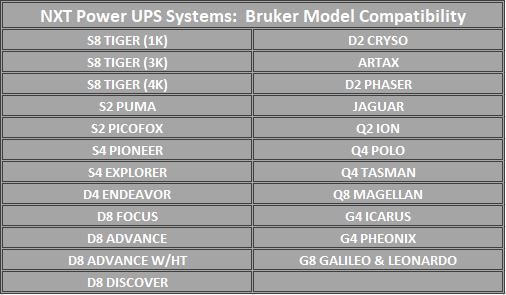
    Protect your electronic systems and ensure uninterrupted uptime all day, every day. Enjoy peace of mind knowing equipment is protected from problems due to common-mode voltage, power outages, spikes & transients, and more. Below is a compatibility chart for Bruker machine models. Find out more and obtain a quote by reaching out directly to ksa@ksanalytical.com.

  • Water Flow and Cooling Performance – The Lifeline of a Healthy XRD System

    Water Flow and Cooling Performance – The Lifeline of a Healthy XRD System

    X-Ray Diffraction (XRD) systems analyze the structure of materials such as crystals and powders. The X-Ray Tube generates heat from the interaction of electrons in the cathode and the anode. The electrons emitted from the cathode (filament) are accelerated towards the anode – when the electrons hit the anode, they produce x-rays. Keep in mind that the focal “spot” on the anode is most commonly only 12×0.4mm rectangular. The full power of the generator is being dissipated in this tiny surface area. Without the built-in safety systems of the XRD machine, were the heat generated by this process not dissipated through circulated water cooling, the X-Ray Tube and the XRD system would certainly sustain damage. Consequently, water flow and cooling performance are critical to a healthy XRD system.


    Water Cooling System Issues

    The following are four main issues to watch out for:

    1. Water leaks – Water leaks occur as a result of loose, damaged, or improperly connected water lines. Not only can water leaks cause damage to the X-Ray tube, but they can also damage other XRD system electronic components.

    2. Insufficient water flow – When the water flow rate is too low, this can result in the overheating of the X-Ray tube, subsequently dropping the intensity of the X-Ray beam. Because the machine is constantly monitoring rate of flow, this issue results in water flow alarms and disruption of the XRD analysis.

    3. Inconsistent water flow – Variance or inconsistency in water flow can lead to temperature fluctuation in the X-Ray tube. This can affect the quality of the x-ray beam and the integrity of the collected XRD data, especially in high-resolution applications.

    4. Blockages in the water circuit – Blockages occur when there is a buildup of particulates (mineral buildup or debris) which reduce or completely block water flow. Again, this can reduce or block water flow resulting in flow rate faults and disruption to the operation of the XRD system.

    Components to Inspect and Replace


    To prevent water flow issues, it is critical to regularly maintain and inspect the water cooling system to ensure ongoing peak performance. As part of every annual Preventive Maintenance Service performed by KS Analytical Systems, the following components are inspected and replaced:
    -Tube Stand O-Rings: The X-Ray tube stand secures/holds the X-Ray tube and isolates the x-ray emissions when the shutter is closed. As part of the cooling system, the tube stand contains several water pathways and connections to circulate water through the X-Ray tube to prevent overheating. The O-Rings are seals installed around the water connections to prevent leaks and achieve a tight fit between the tube stand and water connections. Over time, these O-rings can become brittle or misshapen (flattened out / warped). Whenever the X-Ray tube is removed, we always recommend inspecting these O-Rings.
    -Water Flow Sensor O-Rings: The water flow sensor monitors the water flow of the XRD cooling system, plays a crucial role in the redundant safety systems of the machine, and supports consistent accuracy and reliability of the XRD data. The XRD system is programmed to alert the operator and shut down X-Ray generation in the event of a water flow rate reduction below a safe threshold–below roughly 3.6 liters per minute (some machines have a two-stage shut down process / some go into standby mode). Note that the target threshold rate of water flow is 4 liters per minute or above. Much like the tube stand O-Rings, over time these O-Rings can deteriorate / become brittle which can result in failure. Also, during the process of replacing the impeller wheel bushings (located inside of the water flow sensor) these O-Rings are very susceptible to damage when opening / installing the cover of the sensor. Like the other components on this list, we recommend replacing the Water Flow Sensor O-Rings annually.
    -Water Flow Sensor Impeller Wheel Bushings: The Water Flow Sensor Impeller Wheel Bushings consist of two small components that are installed over the shafts of the impeller wheel. These bushings are very important to the rotation of the impeller wheel, and allow a smooth and frictionless rotation. Over time, these bushings can wear out due to the constant rotation of the impeller wheel as well as exposure to water and other particulates/contaminates. If the impeller wheel stops rotating smoothly, this can result in inaccurate readings from the water flow sensor, leading to overheating and potential damage to the X-Ray tube. We recommend replacing these bushings as-needed during PM service.

    We Are Here to Help!


    KS Analytical Systems provides full support for Siemens and Bruker XRD / WDXRF systems, and we are here to partner with our customers to ensure their machines are achieving optimal performance. We also support laboratories and facilities with fully integrated maintenance staff. As part of this effort, we offer a PM Kit containing all of the items summarized in this post. You can find the kit, which includes a specifically-designed Water Flow Sensor Disassembly Tool, at https://store.ksanalytical.com/ . Also, for an in-depth video tutorial for Siemens and Bruker XRD water circuit troubleshooting, visit https://www.youtube.com/watch?v=kn3LnA20i0c&t=1333s . Lastly, if you have any questions or run into any issues with your XRD / XRF system, don’t hesitate to reach out directly by calling (940) 453-8786 or emailing us at ksa@ksanalytical.com . Thank you for stopping by!


  • Filter membrane sample holders for Rotation/Phi stages

    Filter membrane sample holders for Rotation/Phi stages

    The Siemens D5000 and Bruker D8 systems we work with have an optional phi-stage that is very useful. It looks and moves like any other rotation stage, but it’s driven by a stepper motor which actually makes it an additional degree of freedom. The user can rotate the sample at a specified rate, position it at a specified angle, or even perform a scan in the phi axis.

    We have a client who just took delivery of their D5000 and needed to analyze samples deposited on 25mm Ag filter membranes. Other users have tried a variety of solutions with varying degrees of success so this seemed like a good opportunity to create something that worked better was easier to use.

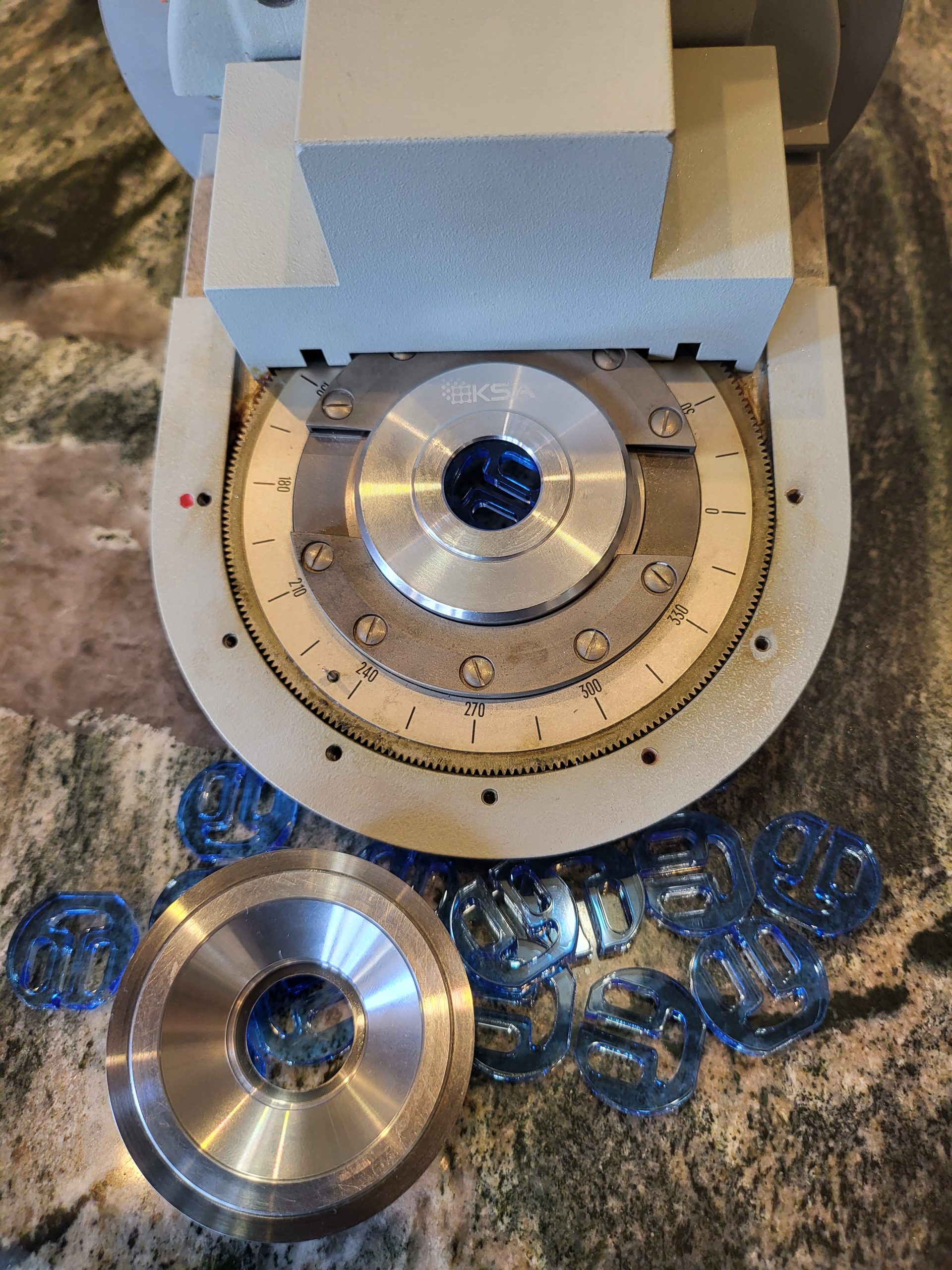
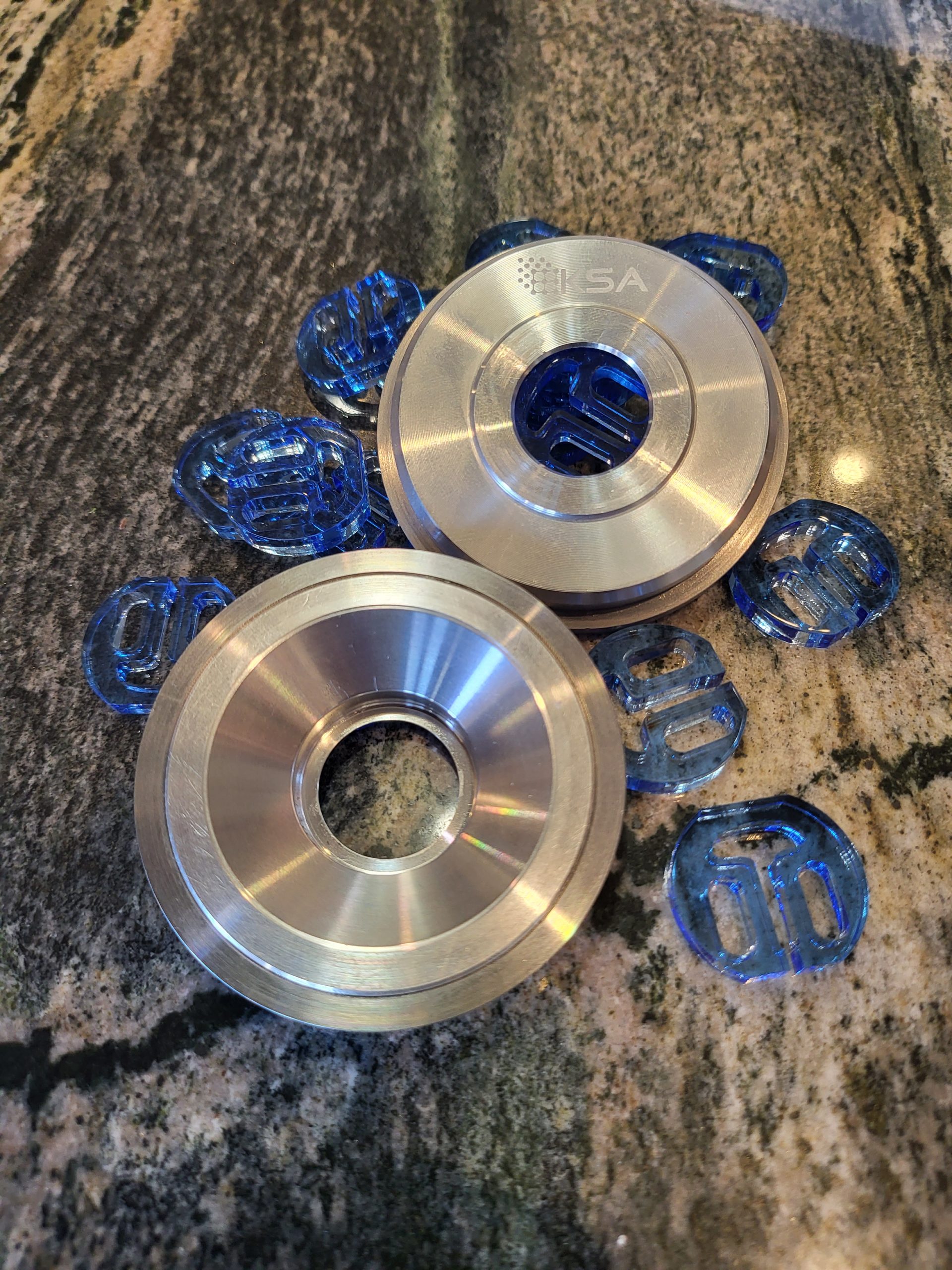
    These stages use a ring of magnets to hold either a cup, transmission attachment, or a dedicated sample holder with a ferrous ring. None of these are a good solution for filters on their own. The prototype shown here uses a steel ring with an Aluminum body. Making the entire holder from steel would be easier, but the Fe in the beam would fluoresce. The filter is held in place from the bottom of the holder to keep it in the plane of diffraction while sacrificing only a small amount of surface area and shadowing at extremely low angled.

    We’ve used snap rings with disks, 3D printed plastic, and now these laser-cut acrylic springs to support the membranes. The acrylic springs have made loading and unloading much easier and from what we have seen, they hold up very well through repeated use.

  • New orbital crusher

    New orbital crusher

    Much of the material we receive is already finely ground and ready for XRD or XRF analysis, but sometimes we receive bulk material which must be homogenized before we can take a representative split for analysis. This is one of the most frustrating parts of working with samples and very time-consuming as we’ve historically done it by hand. This usually means splitting out a large fraction of the material and breaking up larger rocks, etc by hand, sieving, then breaking again, then sieving, etc until we have a somewhat uniform particle size that can be split with some confidence that it is homogenous.

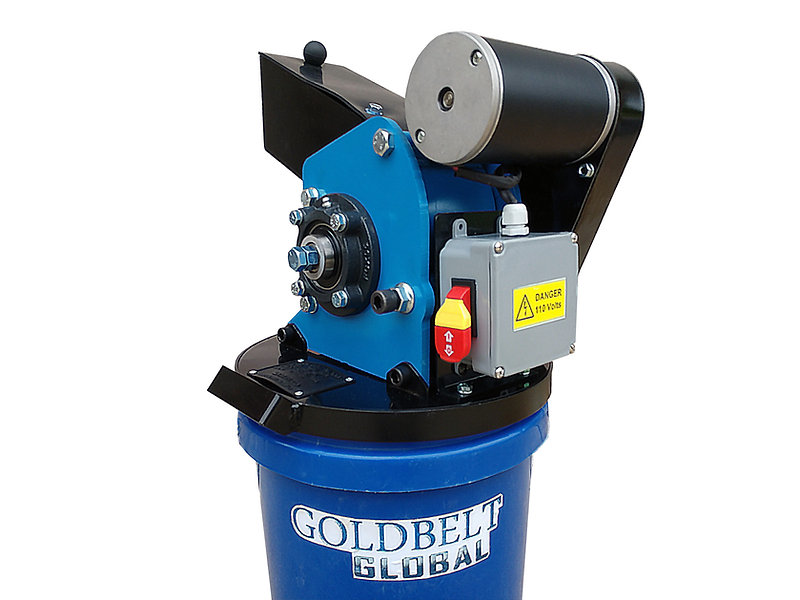
    Looking at coarse crushers brings us into the world of large-scale mining exploration even on the laboratory side. These machines are designed to process a very large amount of material and contamination is not a primary concern. Fabricating our own tool was definitely a possibility, but we recently came across the OLESI orbital crusher. It’s small, inexpensive, and while it’s still designed for more material than we would generally use, it seems very capable of running small batches of a few kg.

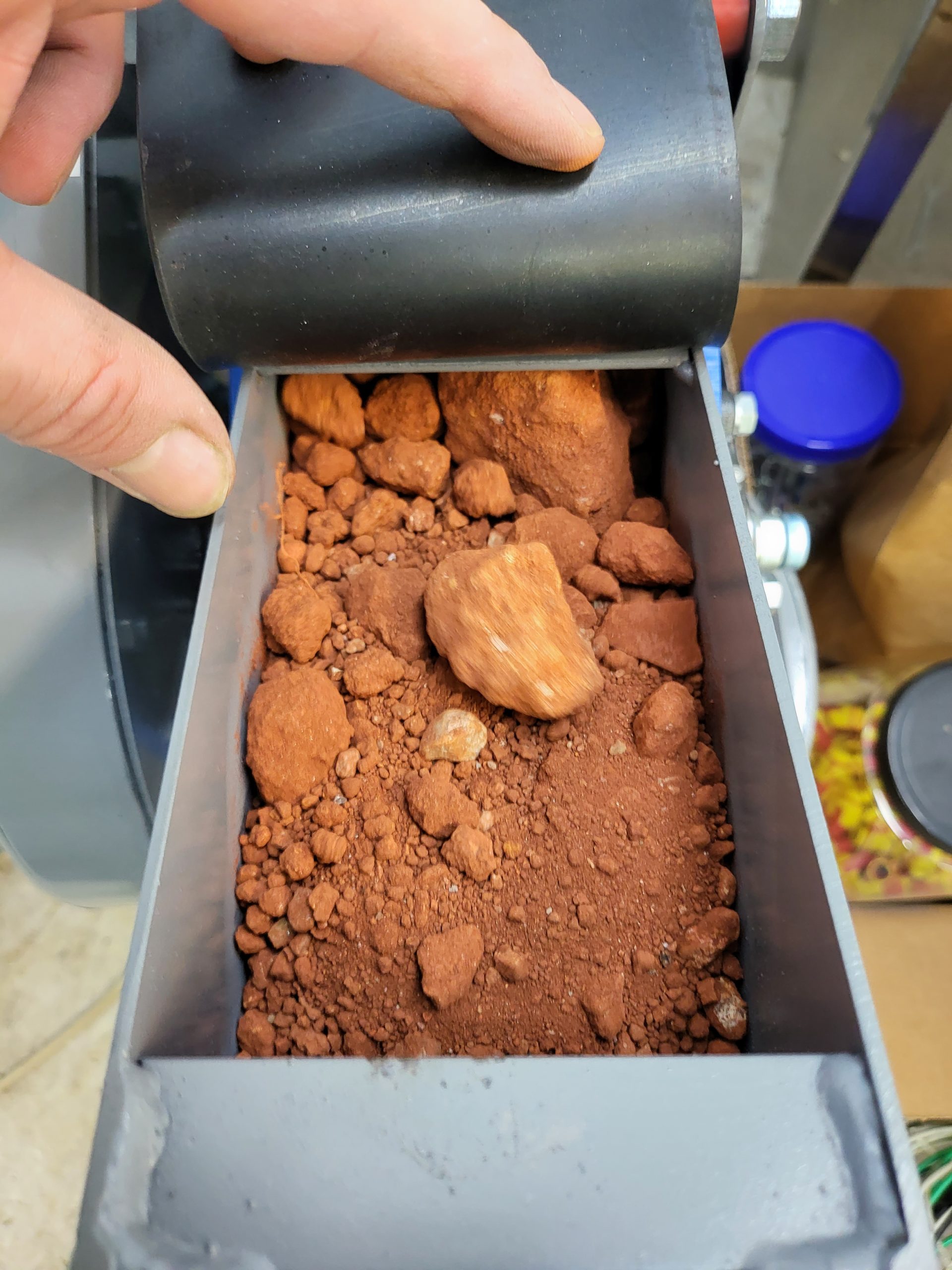
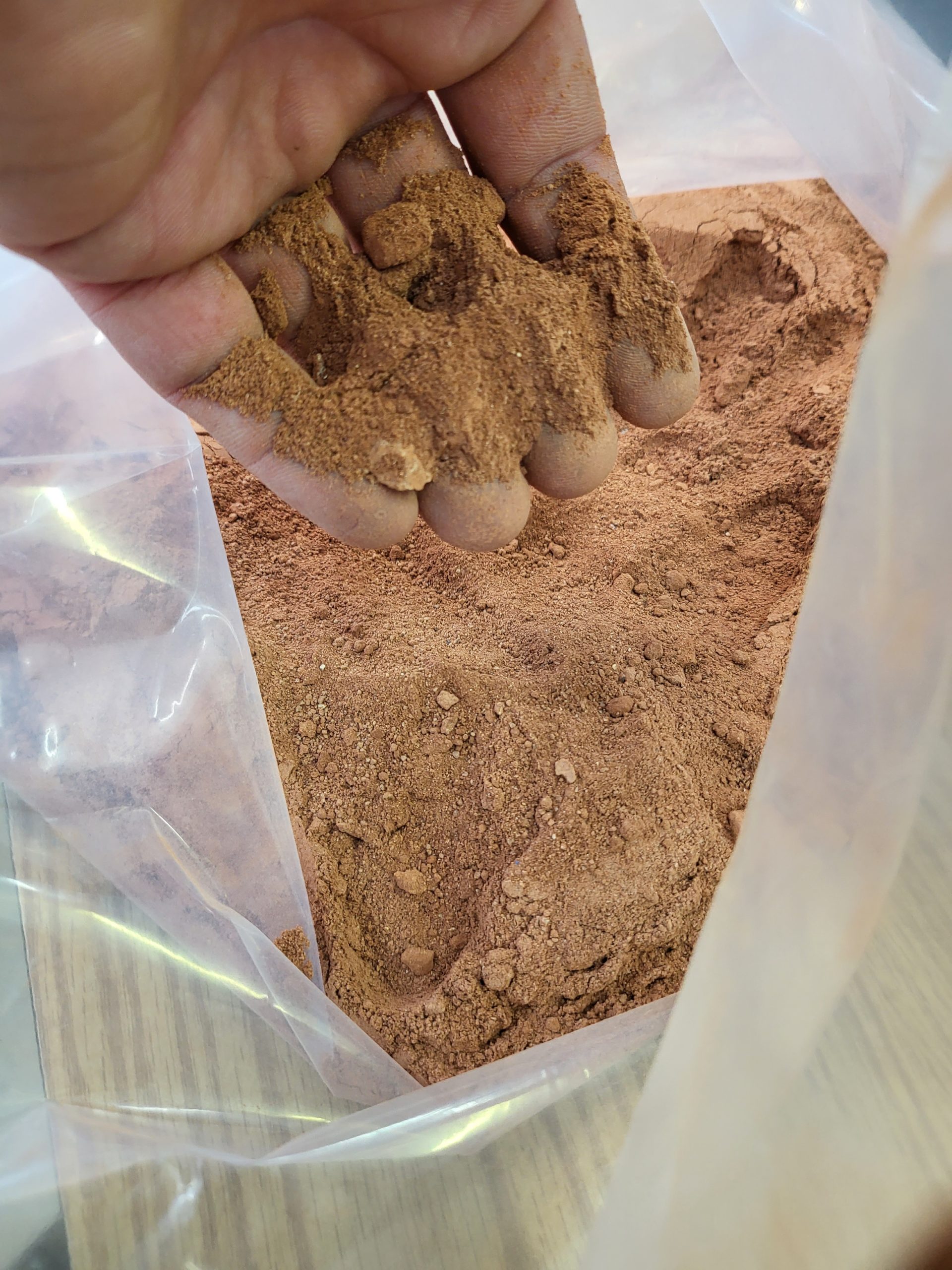
    The unit is designed to sit on top of a 5-gallon bucket, but it’s likely that we’ll fabricate a small base with a pull-out drawer to retrieve the material. We specified the AC motor-driven version, but there is also a 12V version for fieldwork. The first test was a batch of bauxite ore we received a few months ago. This material had sandy components, but also hard rocks of a different mineralogical makeup. Everything needed to be homogenized before we could hope to take a representative split. The OLESI 4 crushed all but the largest pieces which were easy enough to break up with a hammer before feeding. I attached a plastic bag to the bottom (inside the bucket) to catch the product.

    The OLESI line is sold by Goldbelt Global which sounds like it would be an imported product, but it turns out that this is made in the USA. Support, spare parts, etc is all domestic.

    https://www.goldbeltglobal.com/product-page/olesi-4-sample-crusher

  • Rigaku D-Max zero background sample holders

    Rigaku D-Max zero background sample holders

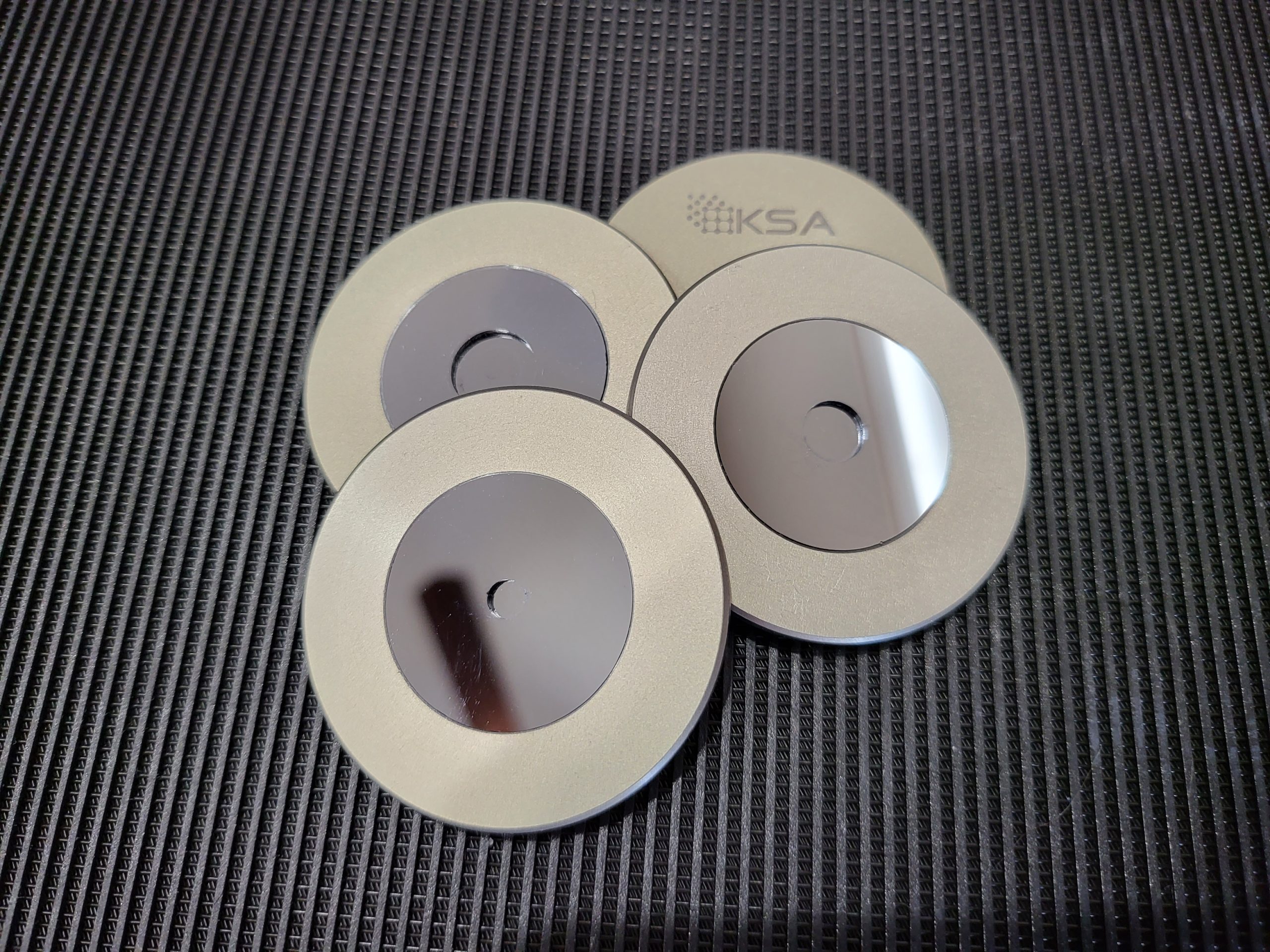
    This project started with a phone call several months ago from a Canadian government lab. They had a very specific application so the design was driven much more by their requirements than most zero-background holder designs. A 1mm deep well with a zero-background plate at the bottom was a key specification. We tried several options for creating this, but settled on a two-part design with a solid “floor” plate and a ring above it. As it turns out, cutting a ring out of monocrystalline Si was more challenging than I’d expected.

    It took a few months of experimenting with various fixtures to settle on a design that had a low failure rate and excellent cut quality, but with that done, the sample holders came out beautifully. Making these with a traditional, solid, plate would certainly be much easier, but this kind of project is always an opportunity to try something new.

  • Introducing the KSA “My First” XRD system

    Introducing the KSA “My First” XRD system

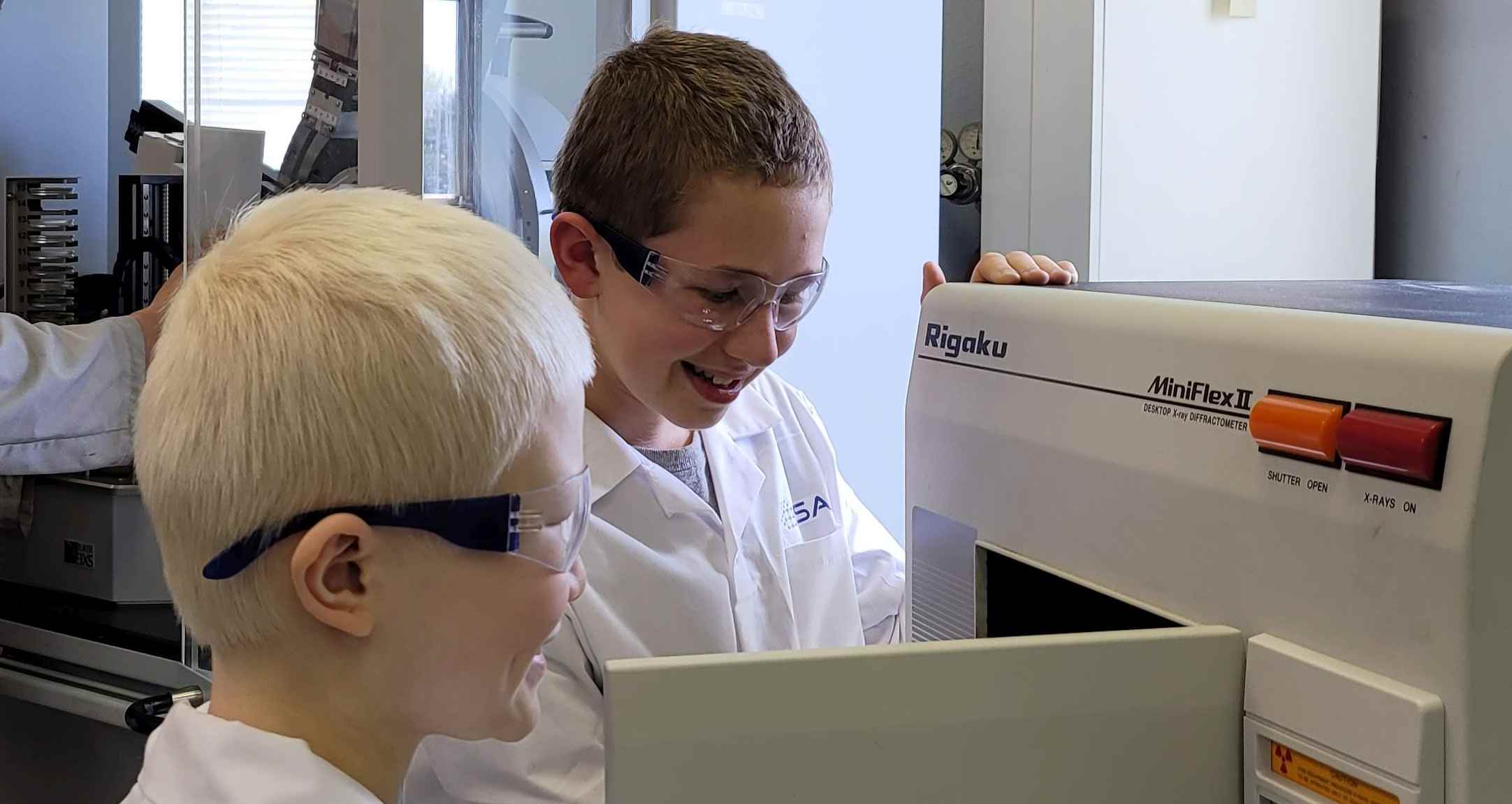
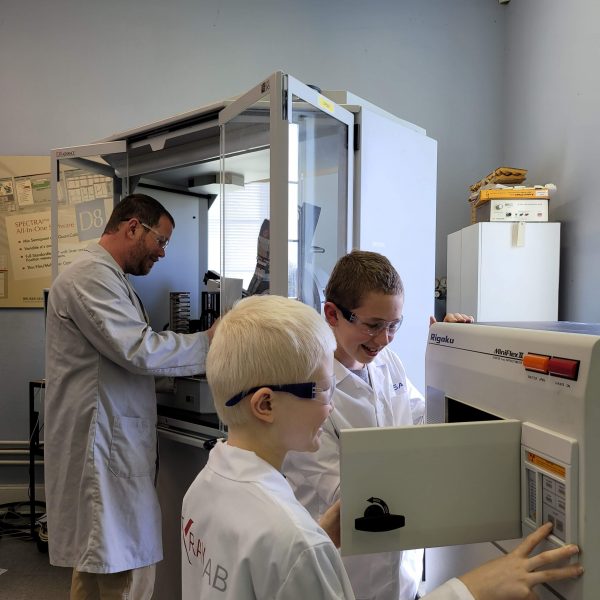
    Your little scientist will love the realistic lights and sounds of their very own X-ray diffraction system. At KSA we are firm believers that kids learn best by “doing”. There’s no better way to bring the next generation of bright thinkers into the lab. Now they can analyze real materials just like Mom and Dad!

    Everything you need to get started

    Basic PPE

    Dosimetry service

    Sample preparation kit

    MDI Jade “Tween” edition

    Now with REAL ionizing x-rays!

    Coming soon: BATF arson investigation kit with accelerant detection!