Tag: Bruker-axs

  • The Ultimate Power Protection Solution:  UPS Designs for Bruker AXS Systems by NXT Power

    The Ultimate Power Protection Solution: UPS Designs for Bruker AXS Systems by NXT Power

    KS Analytical Systems is proud to present a new, total UPS solution for clinical and diagnostic laboratory systems, specifically designed for Bruker AXS, by NXT Power. The Integrity Max & Pro UPS is a complete power protection solution providing isolation, power conditioning, and backup protection for Bruker AXS systems. Regardless of input fluctuations, the Integrity series ensures that the output remains continuous and regulated.

    The industry-leading UPS line is built to power sophisticated computer loads–systems with high inrush current and high crest factors–which eliminates oversizing and reduces operating costs. A custom design output receptacle panel and input line cord was designed specifically for Bruker AXS for faster and simpler onsite set up. These UL Listed and CE marked systems include features that are tailored to Bruker AXS requirements, such as 208 input, 230 volt output as well as 120 volt duplex (added for the attached computer to eliminate back door disturbances).

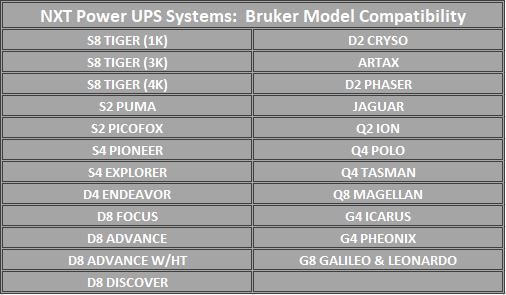
    Protect your electronic systems and ensure uninterrupted uptime all day, every day. Enjoy peace of mind knowing equipment is protected from problems due to common-mode voltage, power outages, spikes & transients, and more. Below is a compatibility chart for Bruker machine models. Find out more and obtain a quote by reaching out directly to ksa@ksanalytical.com.
  • Fully digital autosampler install

    Fully digital autosampler install

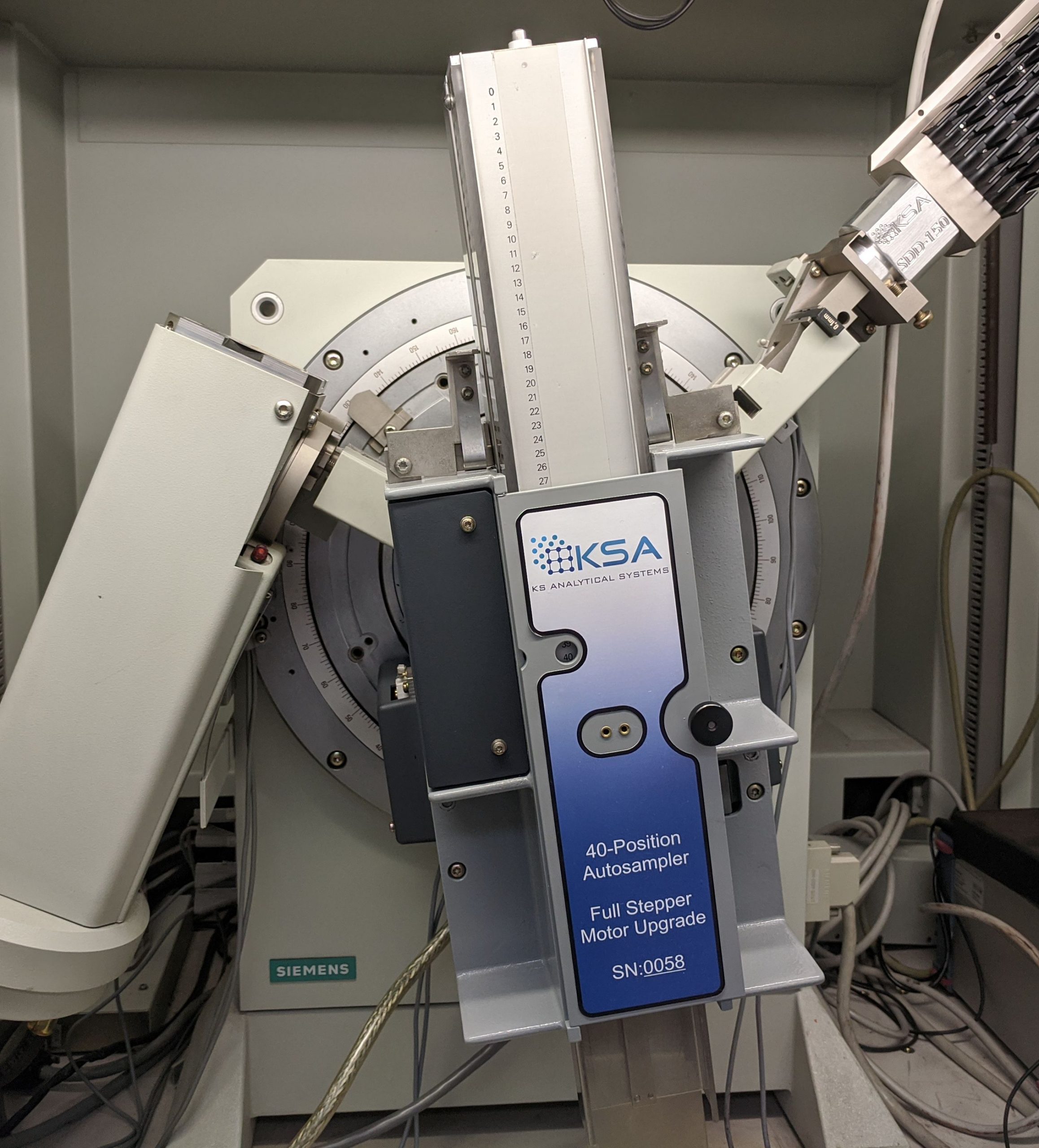
    Another fully-rebuilt, digital autosampler out in the wild. This one is on a system that already has one of our Si-Drift Detectors and an awesome ICDD Jade Pro/PDF-4+ software package. We’ve got all the fancy new hardware at our in-house lab, but when we need the absolute best data, this is our goto configuration.

  • Energy-dispersive detector systems for XRD applications

    Energy-dispersive detector systems for XRD applications

    Energy resolution

    • 140eV under ideal conditions.
    • All KB peaks eliminated electronically.
    • W LA1 (8.40 KeV) lines eliminated from Cu KA1,2 (8.04 KeV) scans even with thoroughly contaminated tubes.
    • Common fluorescence energies (i.e. Fe when Cu tube anodes are used) are greatly reduced. (Brehmstralung effects are impossible to remove completely)
    • Most PSD detectors offer no better than 650eV. This allows for a great deal of fluorescence energy to pass as well as W LA1 from older Cu tubes.

    Low angle scatter

    • The detector mounts in place of the traditional scintillation counter allowing for use of automated variable (motorized) or interchangeable aperture slits to control angular resolution. Scans starting from 0.5 degrees 2? are possible with the proper slit arrangement just as they are with the scintillation counter. The user controls the intensity vs angular resolution of the scan based upon the ideal conditions for their work rather than the limitations of the hardware.
    • Position sensitive detectors are wide open by design which necessitates knife edges over the sample and additional mechanical aperture plates to block air scatter at low angles. Closing off the detector limits the useable channels and reduces the benefit of these detectors dramatically.

    Truly zero maintenance design

    • No delays – The detector is ready to collect data almost as soon as power is applied.
    • No external cooling – Air backed Peltier cooling eliminates the need for water circulation and/or liquid nitrogen.
    • Zero maintenance vacuum design eliminates reliance on an ion pump/backup battery.
    • 12-month warranty against hardware failure under normal use.

    Versatility

    • The Digital Pulse Processor (DPP) includes a usb interface allowing for adjustment and refinement should they be necessary for a particular application. With optional software, full quantitative EDXRF analysis can be performed.

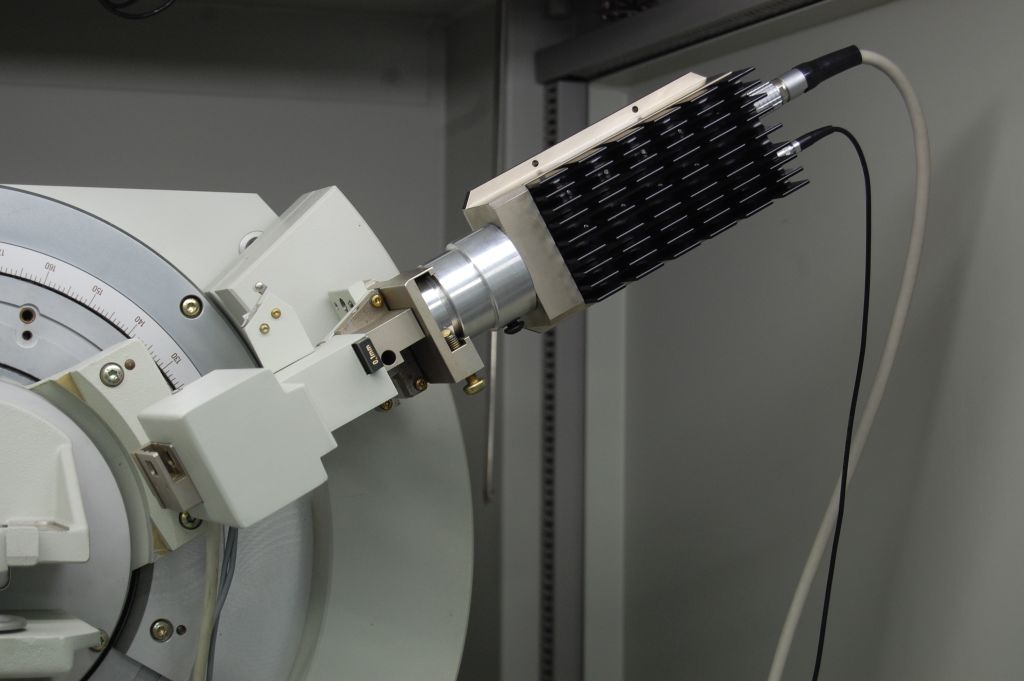
    The detector can be set for any common XRD anode (energy) easily. Multiple energies may even be configured to allow for use with various anodes without the need for additional hardware. We specialize in Siemens (now Bruker) XRD and WD-XRF instrumentation and have installation kits ready for the D500, D5000 and D5005. The output is a standard BNC cable with a 5V square pulse output which is standard across every manufacturer we’ve worked with. Kevex and Thermo Si(Li) detectors used this same output.

    Please contact KS Analytical Systems for a quote.