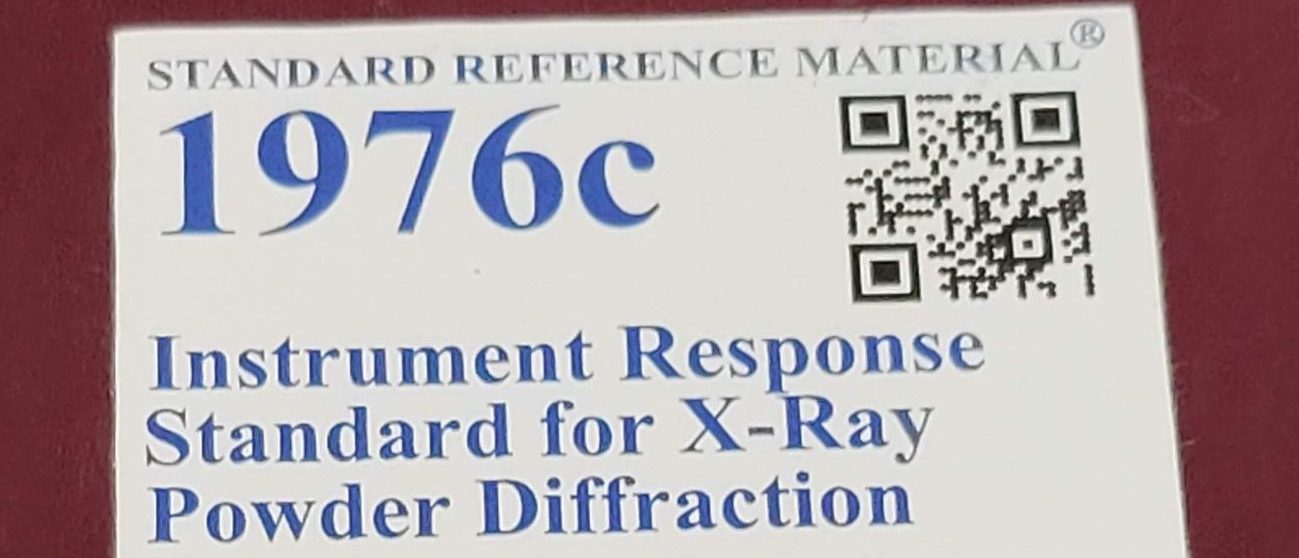
Tag: D4

  • NIST 1976c custom mount

    NIST 1976c custom mount

    It’s easy to forget how much of our scientific work hinges upon comparative data. The entire field of metrology is concerned with the verification and maintenance of “standard reference materials” (SRMs). Creating a perfect reference standard essentially involves proving a negative. In the XRD world, we need to prove that there are no impurities, no crystalline defects, no unaccounted for thermal variations, no stress/strain effects present, and above all, that the first unit produced is effectively identical to the last and all between.

    There really isn’t any one material that checks all the boxes, but the NIST gets very close thanks to the efforts of Mr. Jim Cline and his associates. The hardware they’re using is completely custom to the point that it bares no resemblance to the instrumentation we normally work with. There’s a great page on their divergent-beam lab here.
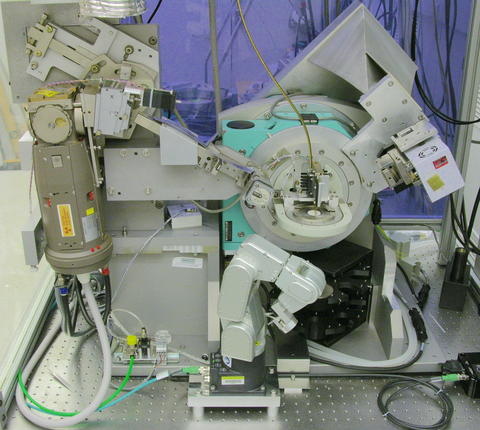
    Image of DBD

    The NIST 1976 material has been a mainstay in regular monitoring and certification of XRD system performance for many years and is now on its third (c) generation. With this most recent revision the shape of the standard has been changed from a flat plate to a round disk. This allows for much greater compatibility across the range of sample holders in the market.

    This week we made a custom mount for a company using a Siemens D5005 with a 40-position autosampler. It’s common to mount these, but this is the first time I can recall doing so for this particular autosampler so I thought it was worth sharing a little about the material and a picture of the finished product.
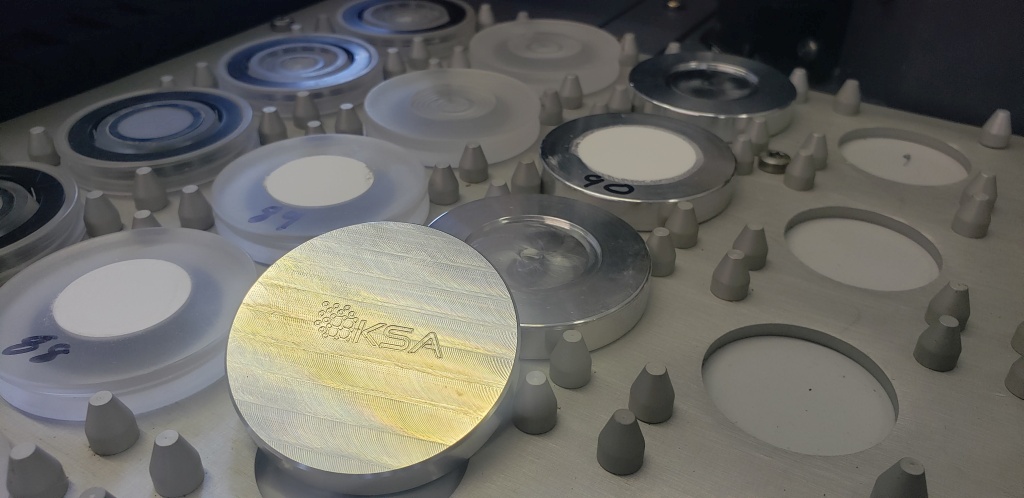
  • PMMA vs Aluminum sample holders

    PMMA vs Aluminum sample holders

    Plastic sample holders have been the default option XRD for decades. They’re inexpensive to make, good enough for most purposes, and very resistant to a wide range of chemicals. Seems like a “win” all around right? As long as they’re made correctly and from the proper materials, these work just fine. Spoiler alert: 3D printed thermoplastics have a distinct structure so if you try making your own, be sure they’re well out of the irradiated area.

    We’ve seen a big move toward more zero-background holders in the last few years and they’re definitely incredible, but many XRD users aren’t concerned with running extremely small volumes as much as they are eliminating or minimizing the scattering of x-ray by the plastic at low angles. As a general rule for polycrystalline materials, the lower the average atomic number of the material, the more efficiently it scatters x-rays. We’re not talking about Bragg diffraction. More like shining a flashlight on a white sheet of paper. Compton and Raleigh scattering are the two effects at work here.

    We use this effect to great advantage in the XRF world when we want to check out the emission spectrum of the x-ray tube. Running a piece of graphite as the sample allows us to collect a scan which shows all the different energies in the emission spectra. Unfortunately, scatter is highly problematic in XRD.

    This is why we supply aluminum holders with our refurbished systems and why we use mostly aluminum holders at Texray. Different plastics can perform differently, but the problem is characterized by a wide, low hump centered around 10 degrees 2Theta and with a width of about 10 degrees. This is a key area in many materials so anything we can do to clean up the background is usually beneficial.